Engineering the Deep Sea Crawler
The ocean floor represents the most hostile terrestrial environment on Earth, subjecting heavy machinery to immense hydrostatic pressures and corrosive saline chemistry.
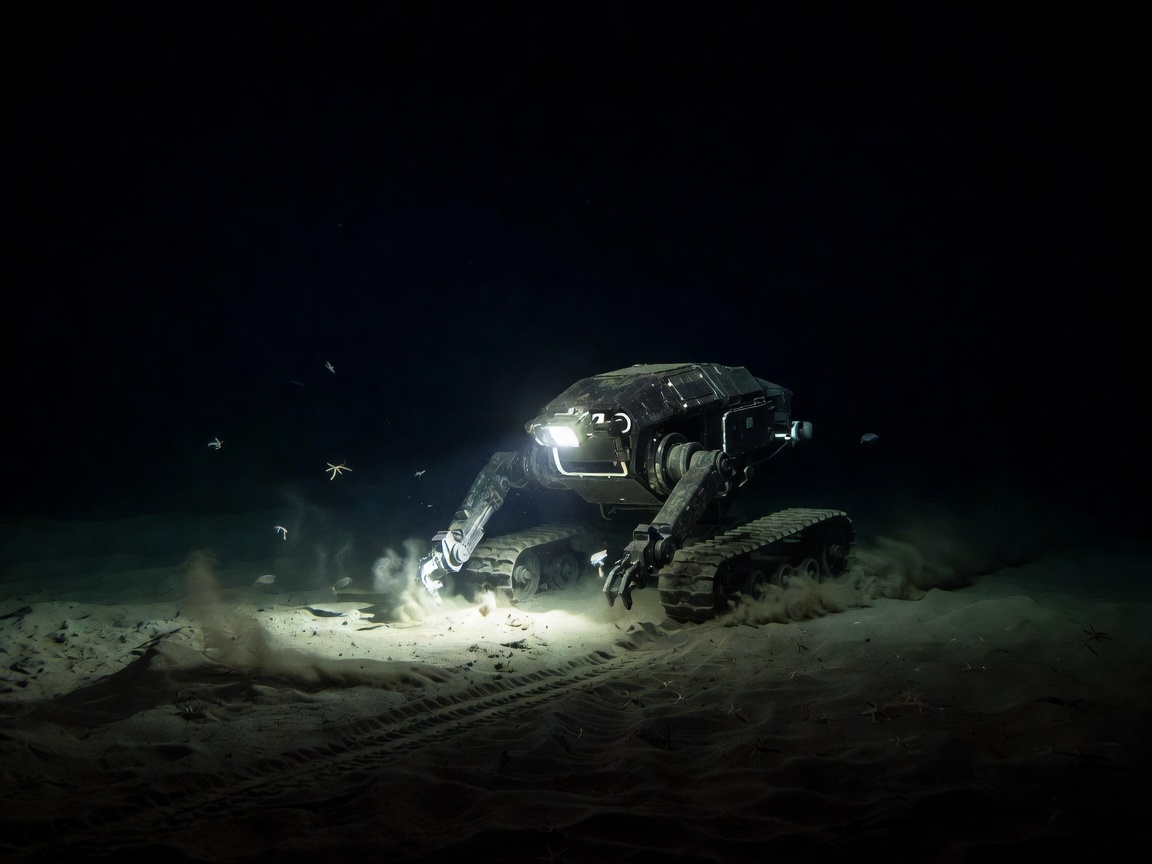
At 4,000 meters depth, ambient pressure exceeds 5,800 pounds per square inch. Sub-oceanic vehicles—ranging from deep-sea trenching crawlers used for fiber-optic cable laying to autonomous Benthic Rovers—must rely on incompressible fluid-filled chassis designs and syntactic foam for buoyancy, rather than traditional air tanks.
"We fill the engine housings with mineral oil. You cannot crush oil. It's an elegant physical absolute in an otherwise chaotic environment."
Trenchers and Cable Layers
Machines like the SMD Deep-Water Trencher operate entirely unmanned, receiving power via heavily armored umbilicals connected to surface support vessels. They deploy massive water jetting swords that fluidize the seabed, allowing cables to sink safely beneath the crust to avoid commercial trawler damage.
| Vehicle Type | Operating Depth | Payload / Task | Power Source |
|---|---|---|---|
| DSV Alvin (Upgraded) | 6,500 meters | Human observation, sampling | Lead-acid / Lithium-ion |
| SMD Multi-Role Trencher | 3,000 meters | 3-meter cable trenching | Surface Umbilical (High Voltage) |
| Benthic Rover II | 4,000 meters | Long-term climate data collection | Battery (1-year deployment) |