Engineering the Arctic Crawler
The hostile expanse of the polar regions demands a unique breed of heavy transport. Here, the ground itself is shifting, fracturing, and fundamentally unstable.
Historically, the approach to extreme cold logistics was brute force, exemplified by the 1939 Antarctic Snow Cruiser. Designed by Thomas Poulter, it was a 37-ton behemoth measuring 55 feet in length. It utilized a hybrid diesel-electric powertrain intended to supply torque to four massive 10-foot smooth tires. Ultimately, its failure taught engineers that ground pressure and traction geometry override pure power.
"Traction in deep snow is less about moving the terrain out of the way, and more about floating above its shear limits."
Nuclear-Powered Icebreakers
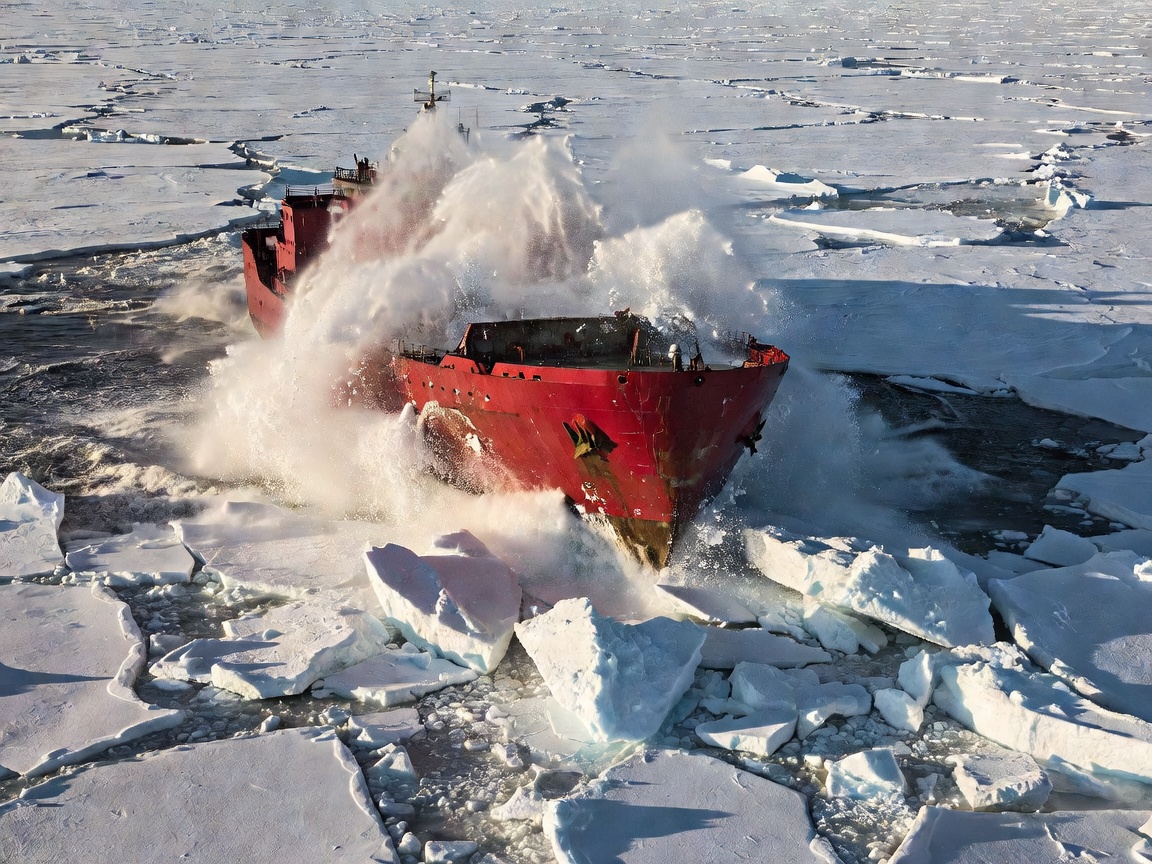
On the maritime front, the Arktika-class icebreakers solve the ice problem with thermal and kinetic energy. Driven by dual nuclear reactors, these 75,000-horsepower leviathans don't merely push through ice; they ride their specially reinforced, angled bows onto the ice shelf, utilizing the vessel's 23,000-ton mass to crush it from above.
| Class/Vehicle | Displacement/Weight | Propulsion | Primary Function |
|---|---|---|---|
| Antarctic Snow Cruiser (1939) | 34,000 kg | Diesel-Electric | Polar Expeditions |
| Arktika Class (Project 22220) | 33,540 tons | RITM-200 Nuclear | Arctic Logistics Lane Clearing |
| Bv 206 (Bandvagn 206) | 4,500 kg | V6 Engine, Tracked | All-Terrain Personnel Transport |